OK Boomer, That's Not Funny Anymore: Stand-Up's Generational Identity Crisis
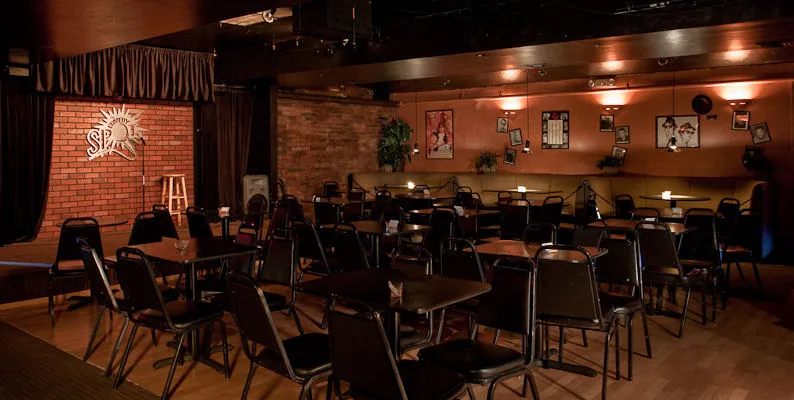
Picture a mid-sized comedy club on a Friday night. The crowd is a genuine cross-section of America — a table of college kids who pre-gamed aggressively, a couple in their mid-40s celebrating something, a group of retirees who got there early enough to claim the good seats near the stage. The comedian walks out and immediately faces a problem that no amount of open-mic grinding fully prepares you for: these people do not share a single cultural reference point, a common definition of "too far," or even a basic agreement on what the word "edgy" means.
This is the generational comedy gap, and in 2024, it has never been wider, weirder, or more consequential for the future of live stand-up.
The Reference Problem
Every generation thinks their pop culture touchstones are universal. They are not. They are intensely, almost aggressively specific.
A comedian who came up in the 90s has a mental Rolodex stuffed with references that land like a thunderclap for anyone over 40 and register as complete static for anyone under 25. Drop a well-timed Seinfeld callback and half the room is with you immediately. The other half is politely wondering if that's a streaming show they should have watched by now.
Flip it around, and the same problem exists in reverse. A Gen Z comedian mining their anxiety about algorithmic identity, parasocial relationships, and the specific horror of being perceived online is speaking a language that their younger audience understands in their bones — and that their older audience finds either baffling or exhausting, depending on their patience level.
The comics who navigate this successfully tend to be bilingual. Not in the sense that they pander to every demographic with calculated precision, but in the sense that they've developed material with enough universality baked in that the feeling lands even when the specific reference doesn't. The best cross-generational comedy isn't about shared knowledge. It's about shared humanity — the embarrassment, the confusion, the low-grade terror of being alive. That stuff doesn't have an age requirement.
The "Edgy" Renegotiation
Here's where the generational conversation gets genuinely complicated, and where comedians report the most friction in mixed-age rooms.
The definition of edgy humor has undergone a near-complete inversion over the past decade. For older audiences, edgy traditionally meant transgressive in a fairly specific direction — crude, provocative, willing to go to uncomfortable places that polite society avoided. Shock value had genuine currency. Saying the unsayable was a form of courage.
For younger audiences, particularly Gen Z, that particular flavor of edgy often reads as lazy. Shocking for the sake of shocking feels like a shortcut — a way of getting a reaction without doing the actual work of being funny. What younger crowds find genuinely daring is often more conceptually weird, more self-aware, more willing to interrogate the joke itself while telling it. The transgression has moved inward.
This creates a fascinating situation where a comedian can be seen as boundary-pushing by a 55-year-old and deeply conventional by a 22-year-old in the exact same set. The generational lens doesn't just change what's funny — it changes what's brave.
The "Sensitive" Conversation (Again, Sorry)
No article about generational comedy divides can fully sidestep the ongoing argument about sensitivity, so let's address it quickly and try not to be tedious about it.
Older audiences frequently describe younger comedy fans as oversensitive. Younger audiences frequently describe older comedy fans as nostalgic for a version of comedy that was always punching down and just didn't used to get called out for it. Both groups are at least partially right and almost entirely talking past each other.
What's genuinely interesting, from a craft perspective, is that the comics who are actually thriving across generations tend not to engage with this argument at all. They're too busy working. The most successful cross-generational performers have figured out that the question isn't "what can I get away with" — it's "what do I actually have to say?" When the material comes from a genuine place of observation or vulnerability, the age of the audience becomes less relevant. People recognize honesty regardless of when they were born.
Night-to-Night Whiplash
For working comedians doing multiple shows a week in different cities, the generational gap isn't an abstract cultural discussion — it's a practical logistical nightmare.
A college town show on a Thursday and a casino show on a Saturday might as well be different planets. The room temperature, the patience for slow-burn bits, the tolerance for self-deprecation versus crowd work, the point at which the audience decides they're having a good time versus waiting to be convinced — all of it shifts dramatically based on the median age in the seats.
Some comedians keep separate set lists for different demographics, essentially running two parallel careers. Others commit fully to a single voice and accept that some rooms will be harder than others. The most adaptable performers have developed an almost instinctive ability to read a crowd in the first three minutes and recalibrate on the fly — not changing who they are, but adjusting the entry point.
It's exhausting, and it's also, by most accounts, the thing that makes you genuinely good.
Can Stand-Up Stay Intergenerational?
The pessimistic read on all of this is that stand-up comedy is quietly fracturing into separate verticals — Gen Z comedy, millennial comedy, boomer comedy — each with its own venues, its own streaming platforms, its own stars, and its own definition of what's funny. The algorithm is already doing this to online content. The question is whether live comedy follows.
The optimistic read — and there is one — is that the live comedy room remains one of the last genuinely mixed spaces in American entertainment. Movie theaters are increasingly sorted by franchise preference. Music venues are almost entirely age-stratified. But a comedy club on a Friday night still throws a wildly diverse group of humans into a dark room and asks them to laugh at the same things.
That's harder than it sounds. It requires comedians who are genuinely curious about the full range of human experience, not just the slice they personally inhabit. It requires audiences willing to be surprised. And it requires a shared understanding that laughter itself — the involuntary, full-body, slightly undignified kind — is one of the few things that doesn't check your date of birth before deciding to show up.
Stand-up has survived every technological disruption, every cultural shift, and every generational upheaval since the first comedian walked into a room and said hold on, you're not going to believe this. It'll probably survive this one too.
It'll just require everyone in the room to put their phones down for an hour. And honestly, for both generations, that might be the hardest part.