Thank You for the Material: What Hecklers Actually Do for a Comedian's Career
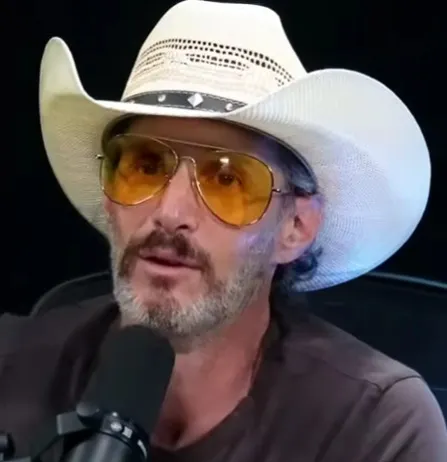
Photo: Josh Wolf, CC BY 4.0, via Wikimedia Commons
Every comedian has a war story about the drunk guy in row three who thought he was funnier than the person holding the microphone. What's surprising is how many of those same comedians will tell you, with complete sincerity, that it was the best thing that ever happened to them. Not in a Stockholm syndrome kind of way. In a very real, very practical, career-defining kind of way.
Welcome to the heckler's paradox — the uncomfortable truth that the worst moments on stage often produce the best comedy gold in the long run.
The Anatomy of a Disaster
Let's be clear about something: nobody enjoys being heckled. Not really. The first time someone shouts something from the back of a comedy club in Akron, Ohio at 10:45 on a Saturday night, the comedian's body goes through something that closely resembles a car crash in slow motion. Heart rate spikes. Brain scrambles. The carefully rehearsed set that took three months to build suddenly feels like a sandcastle at high tide.
But here's where it gets interesting. The comedian who survives that moment — who finds the comeback, who redirects the room, who turns the chaos into a punchline — walks away with something no writing session can manufacture: authentic, unscripted material forged under genuine pressure.
Psychologists who study performance anxiety call this "stress inoculation." Comics just call it Tuesday.
The audience, for their part, knows exactly what they're watching. There's a reason a well-executed heckler shutdown gets a bigger reaction than almost anything else in a comedian's arsenal. It's not just funny — it's real. The crowd witnessed the threat. They felt the tension. And when the comedian lands the response, the collective relief and delight is something pre-written material simply cannot replicate.
Why Hostility Becomes Heritage
Talk to enough working comedians — the ones doing 200 dates a year in clubs from Nashville to Portland — and a pattern emerges. The stories they tell most often at industry parties, the moments they reference in podcast interviews, the anecdotes that show up in their specials years later? Almost universally, they involve something going wrong.
A comedian who spent years working the Midwest circuit described a night in Indianapolis where a bachelorette party of twelve decided, collectively, that the show was their personal backdrop. After attempting to work around them for nearly fifteen minutes, he leaned into the chaos so completely that the confrontation became the show. That bit, refined over subsequent performances, made it into his first Comedy Central appearance.
That's not a fluke. That's a pattern.
The reason these moments resonate so deeply with audiences goes beyond simple schadenfreude. Comedy, at its core, is about shared human experience — the awkward, the uncomfortable, the things we all recognize but rarely say out loud. A heckler introduces genuine stakes into what is, let's be honest, a pretty low-stakes environment. Suddenly the comedian isn't just performing. They're surviving. And audiences are wired to root for the survivor.
The Craft Behind the Comeback
Here's what the crowd almost never sees: the years of micro-decisions that make a great heckler response look effortless. The best comedians aren't winging it. They're drawing on a mental library of crowd work techniques, audience read strategies, and improvised structures that have been stress-tested across hundreds of shows.
There's a significant difference between a comedian who reacts to a heckler and one who responds. Reacting is emotional — it's defensive, often mean-spirited, and while it might get a cheap pop from the crowd, it rarely translates into lasting material. Responding requires the comedian to treat the heckler as a collaborator in the worst possible improv scene imaginable, find what's actually funny about the situation, and steer the room back toward something worth remembering.
The best crowd work isn't an attack. It's a redirect. It's finding the absurdity in the interruption and amplifying it until the heckler becomes, however briefly, part of the act.
Some comedians have built entire sections of their specials around this principle. The heckler story gets cleaned up, contextualized, and shaped into something with a beginning, middle, and end. The drunk woman who yelled about her ex-husband becomes a character. The guy who couldn't stop laughing at his own joke becomes a cautionary tale. The real moment gets mythologized, and the mythology becomes the material.
The Audience Knows More Than You Think
One of the more underappreciated dynamics in the heckler equation is the role the rest of the audience plays. Most people at a comedy show are not hecklers. Most of them are mortified when someone else starts acting up. They came to laugh, not to watch someone ruin the show, and there's a collective tension in the room that the comedian can either harness or get buried by.
When a comedian handles a heckler with grace, wit, and just enough edge to signal that they're not to be messed with, the rest of the audience doesn't just laugh — they exhale. The comedian has restored order. They've protected the room. And that earns a kind of trust that no amount of tight five-minute sets can manufacture.
This is why crowd work has become such a valued skill in contemporary stand-up. In an era where recorded specials are available everywhere, the live experience has to offer something unrepeatable. A comedian who can handle anything the room throws at them — and make it funny in the process — is offering exactly that.
The Long Game
The heckler's paradox ultimately comes down to this: the moments that feel like career-ending disasters in real time are often the ones that define what a comedian is actually made of. The audience forgets a clean set. They remember the night everything went sideways and the comedian brought it back.
So the next time you're at a club and some guy in a novelty birthday sash decides to become part of the show, do the comedian a favor and pay close attention. You might be watching the birth of a bit that ends up on their Netflix special.
And somewhere, the comedian is already mentally taking notes — silently furious, professionally grateful, and absolutely going to make this work.
That's the paradox. That's the job.