Likes Don't Equal Laughs: The Brutal Truth About Viral Comedy Dying on Stage
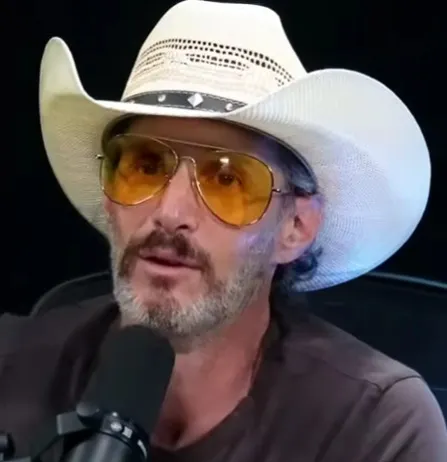
Photo: Vyacheslav Argenberg, CC BY 4.0, via Wikimedia Commons
Somewhere in America right now, a comedian is staring at their phone watching a clip of themselves rack up views at an alarming rate. The bit is sharp, the timing is perfect, and the comment section is absolutely losing its mind. They should be thrilled. Instead, they're quietly dreading the next show, because they know what's coming: a room full of people who've already seen it, waiting for something that can never quite live up to the version they watched on a 4-inch screen with headphones in.
Welcome to the cruelest irony in modern comedy. The very thing that can launch a comedian's career has a nasty habit of kneecapping their live show.
The Algorithm Doesn't Care About Your Set List
Let's be honest about what social media comedy actually is. A TikTok bit is engineered for a specific environment — short attention spans, autoplay mechanics, and a viewer who can scroll away in half a second if you don't hook them immediately. The setup is compressed, the punchline arrives before the audience has time to breathe, and the whole thing is designed to be rewatched, shared, and consumed in a dentist's waiting room.
Stand-up comedy is almost the exact opposite. A live set breathes. It builds. A good comedian takes the audience on a journey that involves trust, misdirection, and the genuine communal experience of laughing in the dark with a bunch of strangers. The joke that lands at the 90-second mark of a live bit works because of the 90 seconds that preceded it.
When you compress that into a clip, you're essentially selling the highlight reel of a basketball game and then asking people to sit through all four quarters.
The "Just Do the Bit" Trap
Here's where it gets genuinely uncomfortable for working comics. Audiences who discover a comedian through a viral moment often show up to a live show with a singular, unspoken demand: do the thing. The thing from the phone. The thing I showed my coworker. The thing.
Comics talk about this phenomenon with a mixture of exhaustion and dark humor. You've spent months building new material, tightening a full hour, growing as a performer — and the room is buzzing specifically because 40% of the audience is waiting for a 22-second bit about their weird uncle or whatever the algorithm decided to love that week.
The problem compounds itself. If you open with the viral bit, you've peaked at minute two. If you save it for the end, the audience spends the entire show in a state of low-grade anticipation that makes it harder for new material to land. And if you don't do it at all, you'll see people checking their phones before the lights even come up.
It's a hostage situation, and the hostage is your creative momentum.
Why Some Comics Make It Work
Not everyone crashes and burns here, though. There's a distinct category of comedian who manages to exist in both worlds without losing their mind, and it's worth examining what they're doing differently.
The comics who survive the viral-to-live pipeline tend to treat their online content as a trailer, not a sample. The clip you see on Instagram is deliberately designed to be incomplete — a taste of a sensibility, a voice, a point of view — rather than a self-contained finished product. When those comedians hit the stage, the audience isn't waiting to hear a repeat. They're curious about what else this person has.
There's also a school of thought that the best response to a viral moment is radical transparency. Some comedians have started openly acknowledging the situation from the stage — essentially making the awkwardness of performing a pre-known bit into the bit itself. It's meta, it's a little chaotic, and when it works, it actually deepens the audience's connection to the performer. It's the comedy equivalent of a musician stopping mid-song to say "yeah, I know, you've heard this one a thousand times" and somehow making you love it more.
The 15-Second Ceiling
There's a structural problem lurking underneath all of this, and it's one the industry is only beginning to reckon with seriously. Social media comedy, by its very nature, rewards a specific kind of joke: the one that requires zero context, zero commitment, and delivers maximum impact in minimum time.
That's a fine thing to be able to do. But it selects against the kind of patient, layered storytelling that defines the best stand-up specials. It selects against callbacks. It selects against the long con of a bit that pays off 20 minutes after it's set up. It selects against nuance.
If the next generation of comedians trains primarily on the feedback loop of social media virality, there's a real risk that the muscles required for long-form live comedy simply don't develop. You end up with performers who are brilliant in 15-second increments and completely lost when someone hands them an hour.
What Actually Gets Lost in Translation
The intangible thing that disappears when a live moment becomes a clip is the room itself. Comedy is not just the words and the timing — it's the energy of a specific crowd on a specific night, the shared tension before a punchline, the collective release of laughter that makes strangers briefly feel like they know each other.
None of that survives the upload. What you get on screen is a document of a moment, stripped of its atmosphere. Sometimes that document is funny enough to stand alone. But it's never the whole thing, and audiences who've only ever experienced a comedian through their phone have, in a very real sense, never actually experienced that comedian at all.
The good news — if you're looking for some — is that live comedy is still growing. Ticket sales are strong, tours are selling out, and people are demonstrably willing to show up in person to laugh together. The hype machine can fill seats. The question is whether it's filling them with audiences who want to discover something new, or audiences who just want to see the clip performed by the original cast.
For most comedians, the answer is probably some of both. Learning to handle that gracefully, without strangling your own creative development in the process, might just be the most important skill in the modern stand-up toolkit.
And no, there's no TikTok tutorial for that.